
Leaving thoughts alone…
Why do people run straight ahead of a danger instead of to the side? I was just watching tv and a hiker in the forest saw a massive tree start to fall. Now a tree is a tall, straight-ish bit of heavy wood pretty much. So, you would imagine that when it falls over, if you are directly beneath it and run in the direction it’s falling, that’s not so good. But if you ran to the side, you might be hit by a bit of foliage, but we wouldn’t be talking a Wiley Coyote situation (showing my age here, but I’m a Road Runner & Scooby Doo girl so there will doubtless be references here and there!)
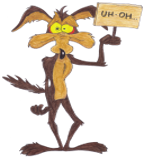
So why do we think we can outrun worry by tacking it head on? Can we just step to the side instead? This is kind of like how metacognitive therapy works. Often, we try to manage worry by evidencing and rationalising thoughts. But this will only get us so far, because sometimes the thought is true and there is a problem that we need to deal with. Other times, the thought may not be true, but it can still bother us. We tend to try to tackle the thought rather than the worry.
MCT says that a thought is just a thought, one of thousands a day we have, and we waste a lot of time trying to battle them instead of seeing them for what they are; just thoughts. MCT suggests that looking for evidence doesn’t always get us where we want to be, sometimes bad things happen. But also, going over thoughts again and again keeps them in our attention so it is hard to move on from them.
MCT utilises a process which is already part of our cognitive processing call detached mindfulness. Adrian Wells and colleagues have done extensive research on this (you can see the references at the end of this article if you want to explore them further). Detached mindfulness refers to doing nothing with thoughts. This sounds strange to people at first. Our instinct with a thought is to disprove it or make it feel better or to simply suppress it. However, this also keeps it in our attention, and a thought needs our attention to exist. MCT takes the stance of seeing thoughts as coming and going throughout the day and engaging with the ones which are useful, rather than fighting the ones we don’t need.
So how do we leave thoughts alone? When we first start this practice in MCT, my clients often feel this is a difficult and complex process. But honestly, it is something we doing already every single day.
What were you thinking about before you started reading this blog? Maybe tasks you have to do today? What to cook for dinner? A conversation you had?
What happened to those thoughts? Did you have to get rid of them or did you simply move on without actively engaging with them?
If you did nothing and just got on with your day…you just used detached mindfulness. MCT utilises this ability to interrupt worry and rumination. At this point most people say “but there must be more to it than that?!” and of course, they are right! However, this is a key factor in making that shift from feeling your worry is uncontrollable to having a strategy that actually works. We’ll continue to explore this within the blog.
Wells, A. (2009). Metacognitive therapy for anxiety and depression. The Guilford Press.